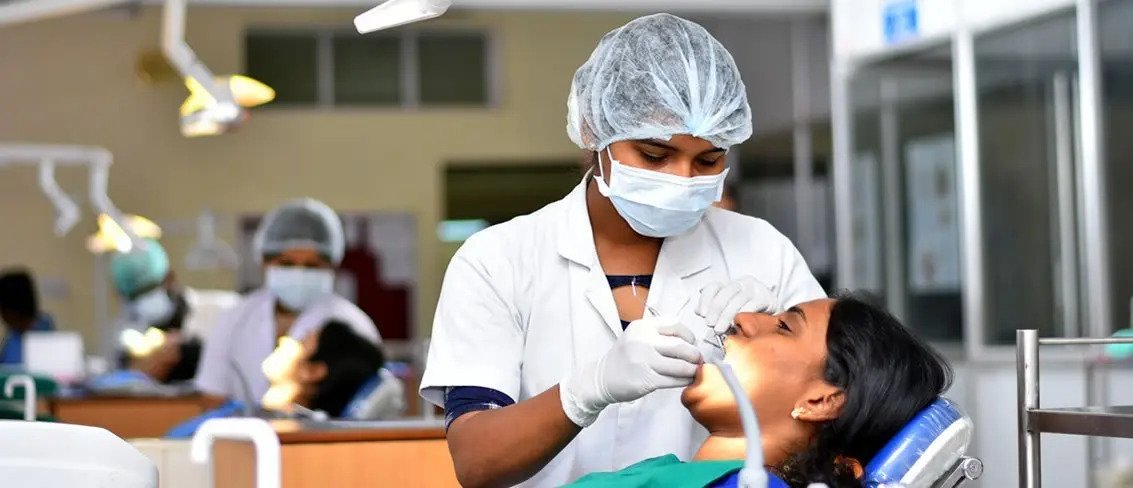
Most people have felt the pain of a toothache. Or if they haven’t, they’ve seen somebody suffering from it. There are many diverse causes of dental pain, two common procedures that many people have undergone for dental pain is root canal treatment and wisdom tooth treatment. The management of dental pain is a fairly complex issue due to a number of reasons including the difficulty in delivering anaesthesia to the region, diagnosis of it, the many orofacial conditions that cause it and so on. Our Dental Hospital In Coimbatore offers a variety of ways to manage dental pain. Our expert consultants have delivered thousands of patients in Coimbatore from pain using the very latest therapies and techniques. Do schedule an appointment if you suffer from dental pain.
In short, it is exactly what it sounds like, a makeover of your smile so you can look your very best. Our teeth are rarely perfect. Most people have some level of discolouration and staining. There are teeth which are crooked and those which overlap. There are gaps between teeth and missing teeth not to mention chipped teeth. Fillings are sometimes of varying colours and completely unsuited to facial structure.
Our lips may be awkwardly shaped and cheeks might sag. The smile makeover takes into account all aspects of a person’s face while aiming for the most attractive outcome. Read more about the treatments which are part of a smile makeover at Sri Ramakrishna Hospital here.
Dental caries occur when bacteria in plaque release acids that erode the tooth enamel. Without timely treatment, the decay can spread deeper into the tooth, leading to pain, infection, and damage to the tooth structure.
Regular dental check-ups with experienced dentists allow early identification of decay, reducing the need for complex treatments. Preventive care provided by skilled dental specialists is essential for maintaining healthy, natural teeth.
Gingivitis is the initial stage of gum disease that develops due to plaque accumulation along the gum line. It commonly presents with redness, swelling, and bleeding of the gums while brushing.
With timely professional cleaning and proper guidance from experienced dentists, gingivitis can be completely reversed. Early care helps prevent the condition from progressing to more severe forms of gum disease.
Tooth fractures can result from injury, decay, or excessive biting pressure, leading to sensitivity, pain, and difficulty in chewing.
With advanced restorative treatments, experienced dentists can restore the strength and structure of the affected tooth. Prompt care from dental experts helps prevent further damage and reduces the risk of tooth loss.
Missing teeth may occur due to decay, injury, or gum disease, and can impact chewing ability, speech clarity, and facial appearance.
Experienced dentists plan appropriate restorative solutions to preserve jaw health and facial harmony. Replacing missing teeth helps restore proper oral function and enhances overall confidence.
Malocclusion refers to improper alignment of the teeth or jaws, which can lead to chewing problems, jaw strain, and uneven wear of the teeth.
With personalized treatment plans, orthodontists help correct alignment issues and prevent long-term complications. Properly aligned teeth improve oral function as well as the appearance of the smile.
Crowded teeth occur when the jaw does not have enough space to accommodate all teeth in proper alignment. As a result, teeth may overlap, rotate, or become displaced, making brushing and flossing less effective. This increases the risk of plaque buildup, tooth decay, and gum problems.
In addition to affecting oral health, crowded teeth can impact chewing efficiency and the appearance of the smile. Early assessment and appropriate orthodontic treatment help create proper spacing, improve bite function, and support long-term dental health.
Pulpitis is the inflammation of the tooth’s inner pulp, usually caused by deep decay, trauma, or repeated dental procedures. It often presents as tooth sensitivity or persistent pain, especially in response to hot or cold stimuli.
Early diagnosis and timely treatment by experienced dentists can relieve pain and prevent the spread of infection. Appropriate care helps preserve the natural tooth and avoid more extensive dental procedures.
A periapical abscess is a localized collection of pus that forms at the tip of a tooth’s root due to a bacterial infection. It usually develops when untreated tooth decay, a cracked tooth, or trauma allows bacteria to reach the dental pulp and spread beyond the root into the surrounding bone. This condition can cause intense pain and swelling and may spread to nearby tissues if not treated promptly.
- Results from infection of the tooth pulp extending to the root tip
- Common symptoms include severe throbbing pain, swelling, sensitivity to heat or pressure, and tenderness while chewing
- May be associated with facial swelling, fever, or swollen lymph nodes in advanced cases
Usually the treatment options include root canal therapy, drainage of the abscess, or tooth extraction depending on severity. Early dental care is essential to control infection and prevent further complications
Periodontitis is an advanced form of gum disease that develops when untreated gingivitis progresses deeper into the supporting structures of the teeth. It leads to inflammation and infection of the gums and underlying bone, causing gradual loss of tooth support if not managed in time.
- Caused by prolonged plaque and tartar buildup below the gum line
- Symptoms include gum recession, persistent bad breath, loose teeth, and bleeding gums
- Can result in bone loss and tooth loss if left untreated
It can be managed through professional deep cleaning, medications, and in some cases surgical treatment. Early diagnosis and consistent periodontal care help preserve teeth and maintain oral health.
Gum recession is a dental condition in which the gum tissue gradually pulls away from the teeth, exposing the tooth roots. This exposure can make teeth appear longer and often leads to increased sensitivity, especially to hot, cold, or sweet foods. Gum recession commonly develops due to factors such as gum disease, aggressive brushing, poor oral hygiene, teeth grinding, or misaligned teeth.
As the gums recede, pockets can form between the teeth and gums, allowing bacteria to accumulate and increasing the risk of decay and infection at the root surface. If left untreated, gum recession may lead to discomfort, weakening of tooth support, and eventual tooth loss. Early identification through regular dental check-ups is important to control progression. Treatment focuses on addressing the underlying cause, improving oral hygiene practices, and, in some cases, performing procedures to protect exposed roots and restore gum health.
Impacted Teeth occur when a tooth fails to erupt fully into its normal position in the dental arch due to lack of space, obstruction by adjacent teeth, or abnormal eruption path. This condition is most commonly seen with third molars (wisdom teeth), but can also affect canines and premolars. Impacted teeth may remain partially erupted or completely embedded within the jawbone. While some impacted teeth remain asymptomatic, others can cause pain, swelling, infection, tooth decay of adjacent teeth, gum disease, or cyst formation. Early detection through clinical examination and radiographic evaluation helps in planning appropriate treatment, which may include monitoring or surgical removal.
Jaw Infections are inflammatory conditions affecting the jawbone or surrounding tissues, usually caused by the spread of bacterial infection from untreated dental caries, periodontal disease, trauma, or tooth extractions. These infections can involve the bone (osteomyelitis) or soft tissues and may progress rapidly if not treated. Common symptoms include persistent pain, facial swelling, fever, difficulty in opening the mouth, and pus discharge. Jaw infections can compromise oral function and may spread to adjacent facial spaces, posing serious health risks. Early diagnosis, imaging, and prompt treatment with antibiotics and surgical drainage when required are essential to control the infection and prevent complications.
Tooth Discoloration refers to changes in the natural color of teeth, making them appear yellow, brown, gray, or stained. It can be caused by external factors such as tea, coffee, tobacco use, and poor oral hygiene, or internal factors like aging, tooth trauma, excessive fluoride, certain medications, and pulp damage. Discoloration may affect a single tooth or multiple teeth and can impact a person’s confidence and smile aesthetics. Proper diagnosis helps identify the cause, and treatment options include professional cleaning, teeth whitening, veneers, or restorative procedures to restore a brighter, healthier-looking smile.
Irregular tooth shape or size refers to teeth that differ from the normal form, length, or width, affecting both appearance and function. Teeth may appear unusually small, large, pointed, or uneven, often due to genetic factors, developmental disturbances, wear, or past dental trauma. Such irregularities can impact bite alignment, speech, and chewing efficiency, and may also make oral hygiene more challenging, increasing the risk of cavities or gum problems. Although often cosmetic, irregular tooth shape or size can sometimes indicate underlying dental conditions. Treatment options include cosmetic bonding, veneers, crowns, or orthodontic correction to restore balance, function, and a confident smile.
Temporomandibular Joint Disorder (TMD) is a condition affecting the temporomandibular joint, which connects the jaw to the skull and enables movements such as chewing, speaking, and yawning. It may cause jaw pain, stiffness, clicking or popping sounds, headaches, ear discomfort, and difficulty opening or closing the mouth. TMD can result from teeth grinding, jaw misalignment, arthritis, stress, or injury to the jaw. Symptoms may range from mild to severe and can interfere with daily activities. Management includes lifestyle changes, stress control, physiotherapy, medications, bite splints, and, in severe cases, dental or surgical treatment.
Bruxism, commonly known as teeth grinding, is a condition in which a person unconsciously clenches or grinds their teeth, often during sleep but sometimes while awake. It is commonly linked to stress, anxiety, sleep disorders, misaligned teeth, or an abnormal bite. Over time, bruxism can lead to tooth wear, fractures, jaw pain, headaches, ear discomfort, and temporomandibular joint problems. Many people are unaware they grind their teeth until damage or symptoms appear. Treatment focuses on stress management, using night guards or splints, correcting bite issues, and addressing underlying causes to protect teeth and relieve jaw strain.
Obstructive Sleep Apnea (OSA) is a common sleep-related breathing disorder characterized by repeated episodes of partial or complete blockage of the upper airway during sleep. These interruptions reduce oxygen levels and cause frequent awakenings, often without the person being aware of them. Common symptoms include loud snoring, gasping or choking during sleep, excessive daytime sleepiness, morning headaches, poor concentration, and irritability. OSA is often associated with obesity, enlarged tonsils, jaw or airway abnormalities, and certain lifestyle factors. If left untreated, it can increase the risk of high blood pressure, heart disease, stroke, diabetes, and accidents due to fatigue. Management includes lifestyle changes, weight reduction, CPAP therapy, oral appliances, and in some cases, surgical intervention.
Snoring is a common condition that occurs when airflow through the mouth and nose is partially blocked during sleep, causing the surrounding tissues to vibrate and produce sound. It can be influenced by factors such as nasal congestion, obesity, alcohol consumption, smoking, sleep position, and structural issues of the airway or jaw. While occasional snoring is usually harmless, chronic or loud snoring may disrupt sleep quality for both the individual and their partner. In some cases, it can be a sign of an underlying sleep disorder such as obstructive sleep apnea. Management includes lifestyle changes, positional therapy, oral appliances, and medical evaluation when needed.